SPIN CAFE Frequently Asked Questions
The location of SPIN Cafe has raised some questions in the community. To help keep everyone informed, we’ve put together this FAQ to provide clear, accurate answers all in one place. Our goal is to create open communication so everyone has access to the same information.
1. Why can’t the city shut SPIN Cafe down?
In Washington State, the Revised Code of Washington (RCW) mandates that certain transitional housing, permanent supportive housing, indoor emergency shelters, and indoor emergency housing, be permitted in zones where hotels are allowed, The RCW 35.21.683 states: "A city shall not prohibit transitional housing or permanent supportive housing in any zones in which residential dwelling units or hotels are allowed."
This RCW allows facilities like SPIN Cafe to be legally entitled to operate in areas zoned for hotel use.
In 2021, the Washington State Legislature modified and codified definitions of “emergency shelter” and “emergency housing” in RCW 36.70A.03. In addition to these changes, two other significant provisions affecting zoning codes were made. Per RCW 35.21.683:
- A city shall not prohibit indoor emergency shelters and indoor emergency housing in any zones in which hotels are allowed, except in such cities that have adopted an ordinance authorizing indoor emergency shelters and indoor emergency housing in a majority of zones within a one-mile proximity to transit.
- Reasonable occupancy, spacing, and intensity of use requirements may be imposed by ordinance on permanent supportive housing, transitional housing, indoor emergency housing, and indoor emergency shelters to protect public health and safety.
Reference: https://mrsc.org/explore-topics/housing-homelessness/homeless/homeless-housing
2. Why did the City allow SPIN Cafe to go into its current location?
SPIN Cafe looked for locations allowing shelters and transitional housing in Oak Harbor and entered into a lease with the owner of their current building. The City is not a party to that lease, nor did the City assist SPIN Café in finding a suitable location.
3. Why has there been an increase in public activity near SW Barlow Street and SPIN Cafe?
Since SPIN Cafe relocated to SW Barlow Street, the area has seen a notable increase in foot traffic. Many individuals stay at the facility throughout the day, while others come and go for meals or appointments. During opening and closing hours, large groups, often 20 or more, are transported to and from The Haven, a night shelter located south of Coupeville.
Some individuals who have been trespassed from (meaning forced to leave) SPIN Cafe continue to frequent the area but are not allowed back in to SPIN Cafe. These individuals are often observed loitering on private property, panhandling, or sitting along sidewalks. This increased activity has raised safety and livability concerns among residents and nearby businesses. Here’s what we’re doing about it:
- In 2024, the Oak Harbor Police Department (OHPD) organized quarterly business district meetings at which businesses, SPIN representatives, and residents discussed Safety, Crime, Loitering, and Public Nuisance concerns.
- OHPD, in partnership with SPIN staff, is conducting frequent walk-throughs of commercial property around the SPIN location, working collaboratively to address litter, found property, and vagrancy concerns on private property.
- At the request of Mayor Wright and approval of the Oak Harbor City Council, five new police positions were funded starting in 2025 using a Department of Justice grant and City revenues. The new police staff will enhance the visibility of officers and provide additional coverage throughout the City.
- In May of 2025, OHPD stood up a three-officer Community Response Team to address community public safety concerns and work with regional law enforcement task force partners.
4. What does the data show about safety and police activity in the area of SPIN Cafe?
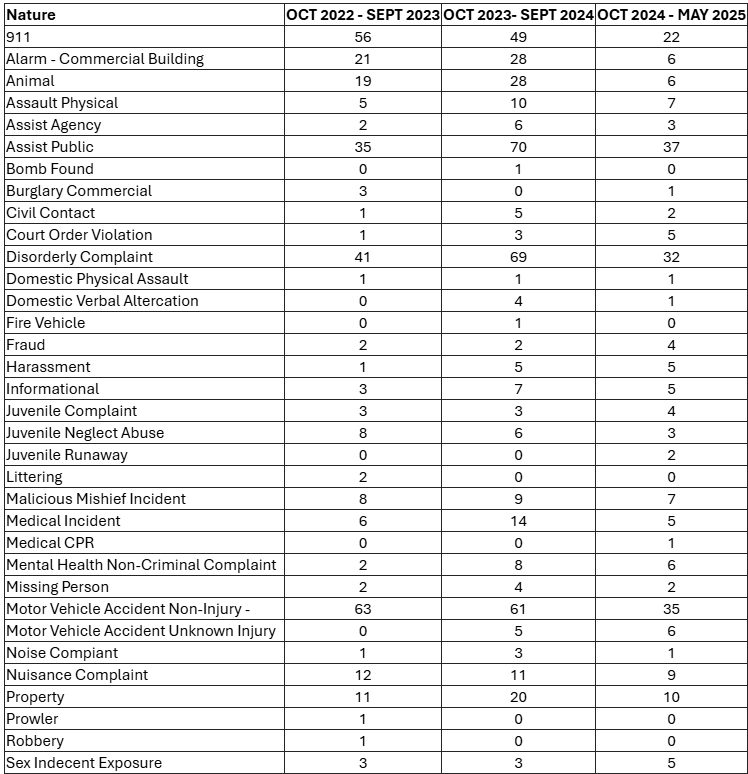
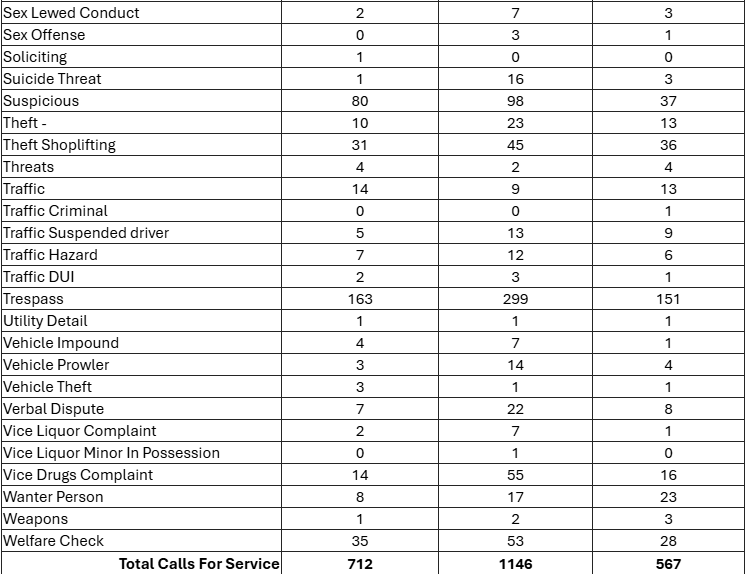
An analysis of police data within a 600-foot radius of the SPIN Cafe facility shows:
- 42% increase in calls for service in 2024 compared to 2023
- 52% increase in calls compared to the five-year average
- 280% increase in arrests in 2024 compared to the previous year
- 158 referrals made by officers to mental health, housing, and addiction services
This data reflects both increased public safety concerns and correlated law enforcement responses in the area.

5. Have there been discussions about relocating SPIN Cafe?
Yes. In response to community concerns, the City of Oak Harbor has expressed the desire to have SPIN Cafe relocated to a more suitable location. This desire has been shared with SPIN Cafe’s Executive Director and Board of Directors.
Additionally, the City has requested that SPIN Cafe construct a protective fence at the rear of the property to help prevent trespassing and better protect their clients. SPIN Cafe’s Board of Directors has expressed a willingness to move forward with the project if the City provides support. However, as of now, no formal plan has been submitted to the Oak Harbor City Council.
Oak Harbor Police Chief Slowik has stated that while the services provided by SPIN Cafe are necessary and valued, the current location presents ongoing safety and livability challenges for the Oak Harbor community. The Mayor and Police Chief are in constant contact with SPIN Cafe and its Board of Directors on ways to address community concerns.
6. Why doesn’t the police department take more action on drug use? In 2021, the Washington State Supreme Court ruled that the state's felony drug possession law was unconstitutional in State of Washington v. Shannon Blake. As a result, law enforcement are limited in their ability to enforce the remaining drug laws, including:
- Police must generally witness the crime in progress to make an arrest, unless specific legal exceptions apply (RCW 10.31.100).
- Many cases are referred to prosecutors for charging, rather than resulting in an immediate arrest.
This shift in the legal framework can create the perception that no enforcement is taking place, even though officers are actively documenting incidents and forwarding cases for prosecution.
Resources:
7. Does the City have any loitering or nuisance laws?
The City of Oak Harbor does not have a general loitering ordinance. Instead, police use existing laws, such as trespassing statutes, to address public behavior.
Washington State Courts have found many general loitering laws unconstitutional for being overly vague or broad. In 2024, in City of Grants Pass v. Johnson, the U.S. Supreme Court determined ordinances imposing penalties for sleeping or camping in public spaces were unconstitutional. However, laws prohibiting loitering tied to specific illegal acts (e.g., drug dealing or prostitution) may be upheld when they clearly define unlawful behavior.
The City Prosecutor and City Attorney regularly assess potential changes to local codes. Any new proposed municipal codes must be presented to and approved by the Oak Harbor City Council before implementation.
8. Are people bused to Oak Harbor from other cities?
There are no large buses bringing homeless people to Oak Harbor.
The SPIN Cafe’s Executive Director told the City: “SPIN Cafe does occasionally get people from Whatcom, Skagit, Snohomish and King Counties who are ‘shelter shopping’ but because of the lack of services, they often leave to find other places with services.”
In the late winter of 2023 and 2024, during the planned closure of a winter night shelter in Skagit County, there were groups of people who were transported to Oak Harbor by van. When the City was notified of this practice, the City began regularly communicating with other jurisdictions and no longer sees this type of migration of unhoused individuals.
9. What is the OHPD doing to enhance public safety?
OHPD is implementing several initiatives to improve public safety:
- New Officer Positions: In 2025, because of Mayor Wright’s request through the law enforcement grant, the City Council approved five additional officer positions. Due to training requirements, it may take 12–18 months before these officers are fully deployed.
- Increased Patrol Visibility: Investments in new patrol vehicles and Mobile Data Terminals help increase the presence of uniformed officers throughout the City. Officers are encouraged to proactively patrol parks, business areas, and neighborhoods when not responding to calls.
- Community Response Team: The City established a three-person unit, focused on addressing crime, homelessness, mental health issues, and livability concerns.
- Mental Health Co-Responder Program: In partnership with Island County Human Services, trained specialists accompany officers to assist individuals facing homelessness, addiction, or mental health crises.
- Community Engagement: OHPD fosters public trust and transparency through programs such as:
- Coffee with a Cop
- Business and neighborhood meetings
- Annual Public Safety Survey
- Citizen Academy
- National Night Out
- Public speaking events and outreach
“Community Catch Up”
“The Wright Blend-Coffee & Conversation with Mayor Wright”
These efforts ensure that community voices are heard and create opportunities for residents, businesses, and local leaders to collaborate with law enforcement to maintain a safe Oak Harbor. The City also partners with county officials – the government entity that receives ALL funds from the state for homeless issues.
Additionally, Mayor Wright has put together a task force called Pathways to Stability. The task force meets once a month. The purpose of Pathways to Stability is to bring like-minded people together to work on a long-term plan to keep Oak Harbor a vibrant and safe community, to address homelessness/unhoused, and address the need for services/resources in Oak Harbor.